Hannah’s story is so much more than her health struggles. I haven’t shared how my daughter died with many people. This particular “story” describes my daughter’s health struggles. One day, I will share more about other aspects of her life as well.
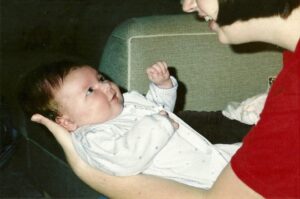
Hannah was born on October 23rd, 2003. She was loved beyond measure from the moment she was born. At 9 pounds, 6 ounces, she came forth into this world- so ready to bring joy into the lives of so many who would come to know and love her.
We had our first true medical scare with Hannah at three weeks old. I remember feeding her, then attempting to bathe her directly afterwards. Hannah began spitting up, and with that, she stopped breathing. My young daughter’s lips turned blue, and she went limp. The fear that I felt that night was indescribable. As a first-time mother who had already experienced an extremely traumatic miscarriage a year prior, I already had a fear of losing another baby.
Her father called 911, and the ambulance came quickly. By the time they arrived, Hannah began to breathe again, and her vitals were normal. The paramedics encouraged us to take her in and have a doctor check her out. We, of course, agreed and took a trip to the hospital that night. All checked out ok, but this would be the beginning of a very long and frustrating health journey for my sweet girl.
For the next five years, I felt like a crazy mom. Hannah would pick up a virus here or there, which in turn would cause vomiting. Anytime my daughter would vomit, she would pass out cold. Imagine how scary it must be to witness such a small and helpless child pass out. Her dad and I, many times, would rush her to the nearest ER. Every time we would get her to a doctor, her vitals would be completely normal again. This was before the days of cell phone recording. I was made to feel, many times, like an overdramatic mother. Doctors continued to look me in the eye and say, “She’s completely normal and healthy.”
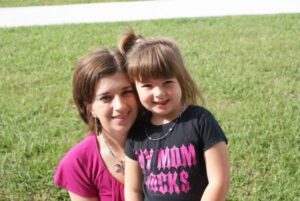
Until the Fall of 2009. We took a bus trip to a church in Texas to see the Acapella group perform. Hannah was riding, as a passenger, in the back of a 15-passenger van. When we arrived, she climbed out of the van. I remember her pale little face looking up at me. She said, “Mommy, I don’t feel very good.” She immediately began vomiting right there in the parking lot and fell to the ground. I noticed right away that she had also soiled her pants. She wasn’t moving, and her tiny body was so still, lying there on the pavement. I was terrified, but just like all the other times, expecting her to wake up at any second. Thankfully, she did wake up.
We called an ambulance right away, and for the next few hours, my daughter would be in and out of consciousness. The ambulance arrived, and they loaded Hannah into it. I rode along in the back. At that time, the paramedics had her hooked up to the heart monitors. Each time she would vomit, the heart monitor showed her flatlining. No heartbeat. My daughter’s heart was not beating. I was in complete shock. The paramedics immediately called the hospital to prepare them for our arrival. All while they stood by with paddles, ready to shock my little girl’s heart back to life, if needed. Each time the vomiting episode subsided, her heartbeat returned, and she stabilized.
The ambulance pulled into the Emergency Room at Cook Children’s Hospital that day, while a team of doctors stood in wait. They rushed Hannah into the trauma section of the emergency department, and I quickly followed. The next few hours were a blur, as the doctors monitored her very closely, paddles in hand, and had no idea why this was happening. She was kept in the ICU for three days. During that time, she was referred to an Electrophysiology Cardiologist. She was put through a myriad of tests, and we finally had a diagnosis.
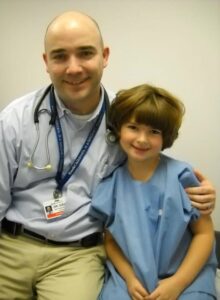
Neurocardiogenic Syncope… essentially, her system would bottom out anytime her vagal nerve became overstimulated. This would cause her heart to stop beating, causing her to lose consciousness. We were told there was no cure for this rare disorder, but a pacemaker would be an effective tool to keep her heart pacing through these episodes. We didn’t have to think very hard about this at all. Hannah had pacemaker surgery in December 2009.
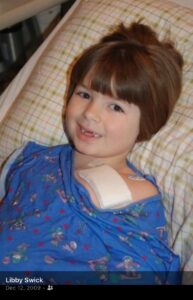
With the pacemaker, Hannah had an outstanding childhood, with little to no health issues whatsoever. The pacemaker did the job it was intended to do, and my little girl had her health back.
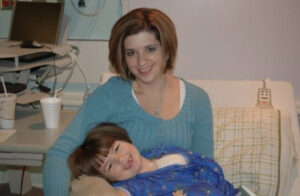
When Hannah reached the age of 17, her Cardiologist said she wasn’t using the pacemaker very much. It was time to either replace it or remove it. During this period of Hannah’s life, her dad and I had been divorced for almost five years (that story is another blog for a whole different kind of page). Hannah was staying with her dad and step-mom during this time, and I was left out of a lot (not by my own choosing). This decision was one of those times. They made the decision to remove the pacemaker. Soon after that surgery, Hannah was asked to leave her dad’s home after a massive blow-up.
Hannah came to live with me during this time. Without her pacemaker, she began experiencing health issues again. It was difficult for her to hold down a job because she began passing out again. She wasn’t feeling well, and it was difficult to get to the bottom of what exactly was going on. I began helping Hannah get into the right doctors. Around this time period, I received a phone call from Hannah’s pediatric Cardiologist. They re-ran some genetic testing and found that Hannah tested positive for the FLNC gene mutation.
At that time, we didn’t know much about it, other than it sounded pretty daunting and scary. We took this information to her adult Cardiologist. The Cardiologist informed us that just because she had the gene did not mean she had any of the structural abnormalities that went along with it (for example, Cardiomyopathy). Hannah tested negative for all heart conditions and was given a clean bill of health.
The problem? Her health struggles continued. She was hospitalized multiple times. I advocated for her pacemaker. After all, she had such a wonderful childhood and did so well until it was removed (this was my thinking, of course). The doctor agreed and did the surgery. We were so excited for Hannah to have a new lease on life. However, that was not the case. The health struggles continued. At one point, she was placed into the ICU for 9 days due to severe, labile blood pressure. It was so stressful and confusing. What was happening to my baby girl?
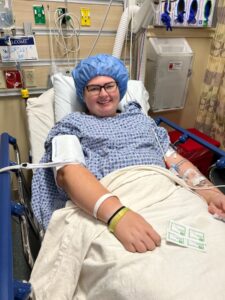
Once she was released, I signed her up for a Mayo Clinic study, and we began a deep dive into her health issues. If Mayo Clinic was the best, that’s where we were going. After multiple trips to Jacksonville and multiple tests and doctors, not one diagnosis. Mayo Clinic could not find anything wrong with my daughter. The only thing every doctor would tell her is to possibly focus on weight loss to see if her symptoms subsided.
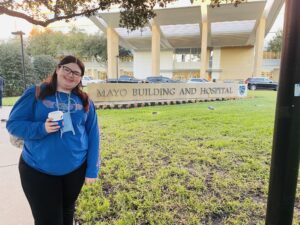
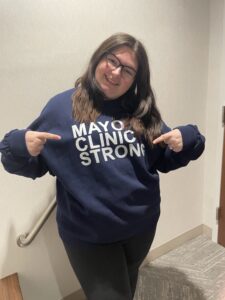
Which takes us to April of 2025. Dr. Dovec in Lakeland agreed that Gastric Bypass would be a helpful tool to get her on the right track. The Mayo Clinic, as well as her local Cardiologist, cleared her for the weight-loss surgery. After this surgery, Hannah began rapidly losing weight. She struggled a bit to get the correct amount of fluids and protein in, but for the most part, she did well. A couple of months later, she began having excruciating upper abdominal pain. I remember her calling me, crying in pain.
From my experience with researching weight loss surgery, I knew that rapid weight loss can cause gallbladder problems. I have also had gallstones and am very familiar with the kind of pain associated with gallbladder attacks. I encouraged her to get to the ER immediately. She went to the ER; they scanned her gallbladder with an ultrasound and found gallstones. She was admitted, and they did the surgery. I was so thankful to her roommate, Melinda, who was there with her during this time. I underwent a full Hysterectomy a couple of weeks prior and was having some complications and was on bed rest.
Hannah came through the surgery and was released two days later. She suffered with so much pain after the surgery, was unable to eat, and began vomiting. She called me to tell me something wasn’t right and never felt such horrible pain. I encouraged her to go back to the ER and keep me updated. They admitted her right away at Lakeland Regional Medical Center, concerned there may be a complication from the surgery.
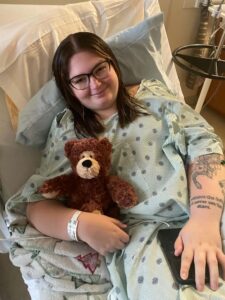
This would be her last 9-day stay in a hospital. During her time in the hospital, she was seen for possible abdominal issues only. They never hooked her up to telemetry or took cardiac blood work. Nor was she seen by Cardiology. Even though she was a pacemaker patient with a known FLNC Gene Mutation (all clearly listed on her charts).
On Hannah’s 7th day in the hospital, I was working as an Elementary Principal. That day, I had two parent Orientations. I went home exhausted. At about 9-10 PM, I received a text from Hannah, saying, “I’m in so much pain. I’m scared. I need you.” I made a cup of coffee, grabbed pillows and blankets with plans to spend the night in the hospital, and headed to Lakeland.
I called my oldest son and asked him to please call his dad to see if he could race to the hospital, as I knew something was terribly wrong. When Hannah’s dad arrived, he could hear her screaming and retching down the hallway of the hospital. They had to move her to a private room so as not to disturb her roommate.
When I arrived, she was calm due to the Morphine they administered to her. Her dad left, and I spent the night.
I slept in the chair by her bed that night. The next morning, I advocated and made a big fuss to the doctor. I asked why her weight loss surgeon hadn’t been consulted, so he contacted her. Within 20 minutes, Dr. Dovec (her weight-loss surgeon) was FaceTiming her cell phone. She thought for sure she solved the mystery of Hannah’s pain and the inability to hold down food/drink. She was diagnosed with a Vitamin B2 deficiency, again with no blood work to confirm.
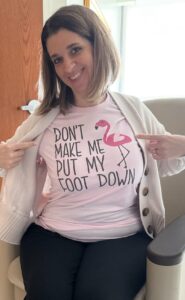
We were relieved. This was a simple fix. One banana bag of vitamins through her IV, and she should be healed. It seemed a little too easy, but I was hopeful. They brought chicken and smashed peas for her lunch after the vitamins were administered. I helped Hannah eat a few bites, and we were so pleased she was able to hold them down. She was so weak that she had difficulty lifting her arms.
I helped her shower that afternoon. Clumps of her hair were coming out in my hands. I was sick with worry, but didn’t want her to see me cry.
As soon as the doctors finished the vitamin treatment and saw that she held a few bites of food down, they started the discharge paperwork. Hannah told me she was still experiencing upper abdominal pain, but thought no one cared. She just wanted to go home.
I left that afternoon to get showered and check on my little boy and husband, with plans to go back the next day to get her home.
When it was time to be discharged, Hannah told me she had a friend who was going to pick her up and drop her off at her house. She expressed to me that she just wanted to sleep and didn’t want me to drive over an hour just to drive her five minutes to her home. I agreed.
Once home, Hannah had a lot of difficulty sleeping, but was able to hold a little food down. The day after she was discharged, I ordered her some Melatonin, hoping that would help her rest. Hannah texted me frequently, telling me she was still in pain and felt awful. She was also so worried about her bills and not being able to work due to the hospitalization. I felt so helpless.
On the second day after she was discharged, she texted me to let me know she didn’t sleep well and was still in pain, but had scheduled her follow-up doctor’s appointment for the next day. I remember feeling relieved that a doctor would be putting eyes on her and checking her vitals. I asked her which doctor she would be seeing, but I never received a text back from her.
It was the second day of school with students for me that day. I also had a post op appointment with the surgeon who did my Hysterectomy, and I had plans to eat lunch with my oldest son. I checked in via text later with Hannah, and no reply. I remember feeling hopeful that she was finally sleeping. Maybe she took the Melatonin and had success.
After lunch and my appointment, I began feeling sick. I ended up heading home, rather than going back to work. It was about 4 pm when I finally sat down on the couch at home. I immediately had a rush of panic. I remember saying aloud, “Hannah!” She and I texted multiple times a day for years, and it was highly unusual not to hear from her. I called her…no answer. I called her roommate, Melinda. She was on her way home and told me she would have Hannah call me as soon as she got home.
The next call I received was from Melinda. She was screaming and crying into the phone. I had difficulty understanding her, but was able to hear that she found Hannah slumped over the bathtub, and unresponsive. It appeared as though she was using the restroom, slid off the toilet, and onto the side of the bathtub. The reels on her phone were still playing. The paramedics were there and asked Melinda to step outside.
My husband and I immediately hopped into the car to head to Lakeland. I remember telling him I was going to throw up and repeating, “No! No! No! No!” over and over again. My husband grabbed a bowl in case I got sick, a couple of bottles of water, and we headed down Route 33 for the worst night of my life. It was going to take us over an hour to make it to Hannah’s house. I called her dad to let him know what was happening and pleaded with him to call me as soon as he got there.
We were halfway through the drive when I received the call no parent ever wants. It was Hannah’s dad, crying out, “She’s gone!”
We pulled off the road as unrecognizable noises came out of my body.
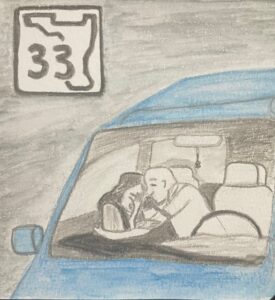
My daughter was dead.
I could go on and on with details of that night, but the reality is… she was gone, and I was so heartbroken.
A couple of months later, I received the results of her Autopsy report. My daughter suffered a heart attack while an inpatient at Lakeland Regional Medical Center. The hospital that never hooked her up to a heart monitor. The hospital that never drew cardiac bloodwork. The hospital that quieted her screams with morphine. How could they miss a heart attack??? They sent her home to die. She died from complications from that heart attack. One, which could have been treated.
We also learned that the FLNC gene mutation can cause sudden cardiac death. Not one doctor ever shared that with us. It’s standard practice in many specialist clinics to place a defibrillator for young people with this diagnosis. This was never offered to Hannah as treatment. We are still unsure of the relationship of this gene mutation to her death. After her death, I was tested for this gene mutation and was negative. My oldest son was also tested and was negative. Because I was tested, my youngest son is not at risk. I am so grateful I do not have to live in fear of this gene mutation affecting the health of my other children.
One thing I know. My girl is no longer in pain. She is experiencing a fullness of joy in the presence of our Lord and Savior, Jesus Christ. She will live forever, for eternity. No more pain, no tears, no sadness.

I will hold my daughter again.